The recurring cycle of grief
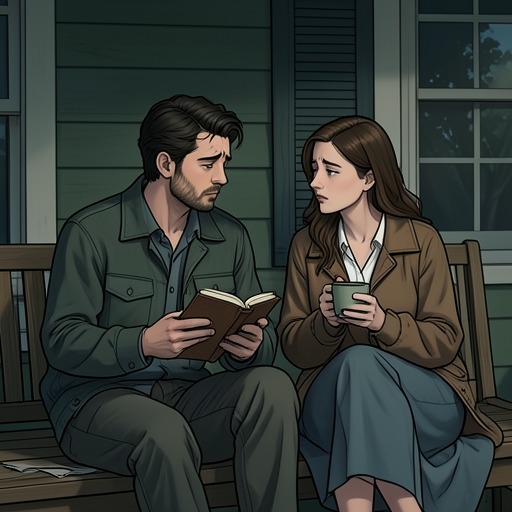
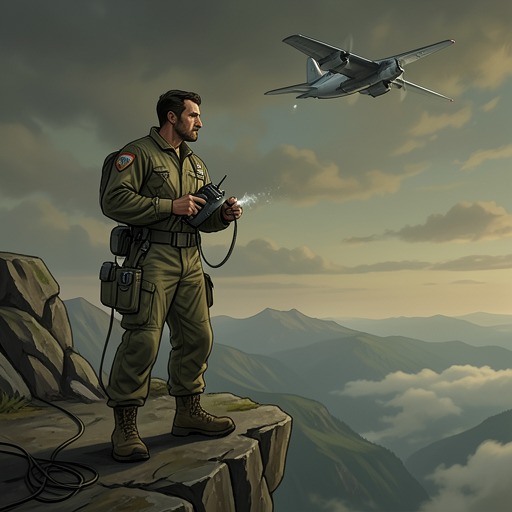
The Dog StarsThe recurring cycle of grief is the pattern through which Hig experiences loss as something that returns and changes form rather than passing cleanly into the past. Bereavement, the absence of Jasper, and the disappearance of fish all reappear in Hig’s routines and memories. Fishing offers a way to continue living alongside grief, but not a cure for it; the same practice that has accompanied earlier losses also makes ecological decline newly legible.
Grief carried through fishing
Hig fishes at successive points of personal loss. After losing a high-school girlfriend, he returned to fishing; he did so again when frustration led him to stop writing. When he met Melissa and began to hope for a lasting love, fishing remained part of his life. He continued after disease struck the trout and after the flu killed Melissa. As supplies dwindled and social disorder grew, fishing for carp gave him a reason to follow a creek whose bends and character had become deeply familiar. The recurrence is not a sequence in which each new loss replaces the last. Fishing becomes the continuing activity through which Hig lives with losses that accumulate.
The practice also holds memories that reach beyond Hig’s adult life. His father gave him a Sage pack rod for his sixteenth birthday, shortly after Hig came to live with him. His father died of pancreatic cancer the following year, before he could teach Hig to use it; Hig taught himself and learned from Uncle Pete. Assembling the rod and fishing became a ritual connected to his father, though the method Hig tried to emulate was one he had never actually seen his father perform. In this inheritance, grief is bound to an act of care and attention: the rod persists, and its use gives Hig a form through which memory can recur without requiring loss to be undone.
After Melissa died in an improvised hospital near their home, Hig was not allowed to bury her; she was cremated with the other dead. He fished through the worsening shortages and unrest that followed. The return to the creek did not restore a life before the pandemic or make mourning complete. Instead, its familiarity gave him a continuing place to go while the world around him changed.
Ecological loss as grief in its own right
Hig’s mourning is not confined to people. He says that the disappearance of the trout is what brings him closest to tears, naming the loss of every kind he once knew. Elsewhere, the loss of animals including tigers, elephants, and birds broadens the field of absence. These disappearances are not merely parallels for private bereavement: they are losses in the living world that Hig remembers and grieves directly.
The conditions of the streams make that grief concrete. Trout have vanished as the water has grown too warm, and Hig adapts by fishing for suckers and carp. He makes himself accept the carp as food, even though their sluggish resistance and unfamiliar qualities differ from the trout fishing he valued. As carp begin to feed nearer the surface, he sometimes fishes with dry flies, but keeps this practice to himself because he expects Bangley to regard it as recreation rather than survival. Fishing thus carries both adaptation and mourning: Hig learns to live with what remains, while the change in the catch marks what has disappeared.
The broader seasonal pattern deepens his fear. In mid-April, the old markers of the season seem increasingly unreliable; although the mountains had snow that winter, two preceding winters had left the peaks nearly dry. Hig finds this prospect more frightening than attacks or disease. He also continues to seek out stretches of forest that have survived or begun to recover, treating them as places where he can acknowledge what persists without confusing persistence with restoration. The environmental losses therefore have their own weight, even as they echo Hig’s personal bereavements.
Later, when he catches five carp, he recognizes that the fish are thin and apparently starving, possibly because altered water temperatures have affected them or their food. He carefully releases them rather than keeping them. The act shows his attention shifting from fishing as a source of food toward concern for the remaining life in the creek. The thought of losing even the carp extends the cycle again: ecological grief does not end with the trout, but follows each further sign of scarcity.
Jasper and the return of absence
Hig’s relationship with Jasper makes absence immediate and personal. During an earlier walk toward the mountains, Hig realizes he has gone out without Jasper for the first time he can remember. The realization frightens him, and he turns back to the airport. The episode establishes how deeply Jasper’s presence is woven into Hig’s sense of safety and ordinary movement through the landscape.
After Jasper’s death, the pattern of grief becomes harder to contain in familiar routines. Hig walks for three days, barely eating or sleeping, and hauls the sled instead of following his usual hunting practice. He imagines Jasper accompanying him, though he recognizes that this is how the loss feels to him, not a change in what has happened. He leaves some venison in the trail for animals and continues moving because sitting still makes the pain harder to bear. The journey offers no resolution; it gives grief time and space, while making clear that time alone does not metabolize the loss.
Hig describes grief as something that passes through everything without diminishing. That understanding explains why the loss of Jasper does not simply succeed the earlier losses as a new, separate stage. It joins them. In the dark, Hig remembers the weight of Jasper beside him and considers what Jasper would have thought of his choices; the memory preserves their bond while emphasizing that Jasper can no longer answer. The recurring cycle is therefore both a continuation of love and a repeated encounter with its absence.
Recurrence without resolution
The book presents grief through repetition, but not as a loop that returns Hig unchanged. Fishing after different losses, walking after Jasper’s death, and noticing the decline of fish and forests all give grief new circumstances. The stars, seasons, waterways, and living creatures change; the act of remembering does not restore an earlier world. Even familiar routines can expose how much has altered.
For Hig, grief is neither a problem solved by explanation nor a feeling confined to memory. It has bodily and environmental dimensions, and it recurs through what he does, what he notices, and what he can no longer find. Fishing offers a practice of attention and continuity; releasing the starving carp registers a changed relation to survival; and walking with Jasper’s absence makes the persistence of attachment unmistakable. The cycle’s significance lies in this refusal of a neat ending: love remains, pain returns, and the losses of people and of the natural world continue to occupy the same life.